Featured
incident energy reductions by design
Ever finish a project and determine that a few tweaks here and there could have made a significant impact in the resulting hazard risk categories. This is a phenomenon that occurs…
electrical safety topics

About Me
Hi, I’m MATT
“I am an electrical safety and engineering consultant with a passion for sharing knowledge and ideas. Throughout my career I have utilized concepts of life long learning and continuous improvement to engineer, design, and safely operate and maintain electrical systems all over the world”. I hope this site is interesting and shares ideas for you and your team!
Incident energy reductions by design
09/15/2021
Ever finish a project and determine that a few tweaks here or there could have made a significant impact in the resulting hazard risk categories. This is a phenomenon that occurs often in major design projects largely due to the rapid progression of engineering and design phases often experienced on large capital projects.
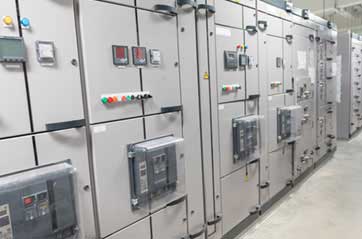
One of the major tools engineers have in modern design projects is to incorporate engineering controls into their designs and intended operation of high risk electrical switchboards, motor control centers, and associated equipment. Over time I have learned by necessity that it;s never too early to begin calculating incident energy and bolted fault currents with conservative assumptions.
When designed and performed properly with the NFPA 70e Electrical Safety in the Workplace, calculating incident energy and fault current can reduce costs during design, installation, and operation for years to come.
Remember to begin planning for reliable and safe operation of equipment in the beginning of design and engineering specifications rather than waiting until start-up with switch gear and motor control centers commissioned. Set design tolerances with as low as reasonable practicable incident energy levels to guide designs.
________________________________________________________________
Proof of Concept with Electrical Modeling Software
07/12/2022
In modern engineering designs, electrical system design and modeling is generally aided with software modeling and rendering systems which saves time, reduces costs, provides administrative over sight for designs and revision, and provides transparency in designs.
Because so much emphasis is placed on the reliability of software modeled outcomes, it is even more important that results are accurate and consistent. Moreover, on large capital projects it is often common for third party companies to actually perform the designs to predetermined specifications and provided modeled results for review.
This is where it is important to take a few moments to not only review the results but also perform a hand performed mathematically calculated “proof of concept’ to test results and assumptions. To calculate all results by hand would be an overwhelming and comprehensive task. However, strategically spot checking fault currents and resulting incident energies will be a great start.
I recommend testing and verifying with proof of concept calculations at least once at each level or zone of protection. This would include main bus levels, motor control centers, motors, and disconnects.
Always keep in mind the original specifications for operation and desired incident energy after a fault to ensure the design is headed in the right direction!
_________________________________________________________________
Keeping Group Think Out of Electrical Safety
05/25/2023
Often times we get so caught up in working at a fast pace that we seldom find times to stop and perform critical thinking on designs and electrical operation of equipment and systems. We get compartmentalized into our work spaces and have little time to review let alone challenge an idea and design.
However, safety in design can take a dangerous turn when a group of individuals reaches a consensus without critical reasoning which allows the evaluation of consequences and possible alternatives such as utilizing engineering controls to eliminate the risk altogether. In addition, group think aides in this desire not to upset the balance of a group of people.
The idea and objective is to work together by respectfully challenging ideas and designs. This can be laborious and difficult at first, but once the culture changes and the team yo are working with identifies with the goal, it oftentimes becomes a fun and rewarding method to improve designs and project outcomes.
Always have some predetermined questions on significant design and operation of electrical equipment. If team members remain reluctant to challenge ideas, appoint someone to do it with that in mind and always remember the end goal is to achieve a safe electrical system for operation.
_________________________________________________________________
Electrical Safety in the Workplace
08/25/2024
The NFPA 70E is the leading standard for electrical safety in the workplace which provides comprehensive guidelines for protecting workers from electrical hazards. Moreover, NFPA 70E requirements for safe work practices to protect personnel by reducing exposure to major electrical hazards. Originally developed at OSHA’s request, NFPA 70E helps companies and employees avoid workplace injuries and fatalities due to shock, electrocution, arc flash, and arc blast, and assists in complying with OSHA 1910 Subpart S and OSHA 1926 Subpart K and features recommended practices to reduce electrical hazards associated with:
- Shock: Which can occur as a result of direct contact with energized components of fields.
- Electrocution: Which results during a fatal electrical shock.
- Arc Flash: A sudden release of incident energy that can cause severe burns and injury.
- Arc Blast: The forceful expulsion of molten metal and other materials during an arc flash.
Key provisions of the NFPA 70E standard seek to increase electrical safety in the workplace through the following include recommended practices and target areas:
- Risk Assessment
- Hierarchy of Controls
- Training & Qualifications
- Maintenance and Inspections
Risk Assessment:
- Requires employers to identify and assess potential electrical hazards, such as shock, electrocution, arc flash, and arc blast.
- Involves a thorough analysis of:
- Equipment: Type, voltage level, fault current, and condition.
- Work procedures: Routine maintenance, troubleshooting, and emergency procedures.
- Environment: Presence of flammable materials, hazardous locations, and weather conditions.
- Employee tasks: Specific activities performed by workers, including their proximity to energized equipment.
- Risk assessments typically consider factors like voltage levels, fault current, and the presence of flammable materials.
Hierarchy of Controls:
- Emphasizes eliminating or minimizing electrical hazards through engineering controls (e.g., de-energization, barriers, guarding, physical separation, ventilation, wet pipe sprinklers, and explosion-proof equipment) whenever possible.
- Administrative controls (e.g., work permits, procedures, training, and standard operating procedures) and personal protective equipment (PPE) are used as secondary measures.
Engineering controls are the most effective way to control electrical hazards because they remove the hazard or reduce the worker’s exposure to it. Administrative controls can also be effective, but they rely on people to follow procedures, which can be difficult to ensure. PPE is the least effective control measure because it protects the worker from the hazard, but it does not eliminate the hazard. The hierarchy of controls is a useful tool for employers to use when developing their electrical safety programs.
Personal Protective Equipment (PPE)
- Specifies appropriate PPE based on the level of risk, including:
- Arc-rated clothing (flame-resistant garments): Protects workers from the thermal hazards of an arc flash, which can cause severe burns. Arc-rated clothing is available in a variety of styles, including coveralls, jackets, pants, shirts, and hoods. The arc rating of a garment is a measure of its ability to withstand the heat of an arc flash.
- Insulated tools and gloves: Protects workers from electrical shock. Insulated tools are designed to provide a barrier between the worker and live electrical parts. Insulated gloves come in a variety of thicknesses and voltage ratings.
- Eye and face protection: Protects workers from flying debris, sparks, and other hazards. Eye and face protection can include safety glasses, goggles, and face shields.
- Hearing protection: Protects workers from noise exposure. Hearing protection can include earplugs and earmuffs.
Training & Qualifications
- Mandates that employees receive adequate training on electrical safety principles, including:
- Hazard recognition and avoidance
- Lockout/tagout procedures
- Proper use of PPE
- Emergency response procedures
- Mandates that employers establish a training program that includes:
- Initial training for all employees who may be exposed to electrical hazards
- Annual refresher training for all employees
- Additional training for employees who perform specific tasks, such as electrical maintenance or troubleshooting
- Requires that employers maintain records of all employee training
Maintenance & Inspections
- The NFPA 70E mandates that electrical equipment be inspected and tested at regular intervals to identify and correct potential hazards. The frequency of inspections and testing depends on the type of equipment and the level of risk.
- Typical key components which require regular maintenance and inspections can include:
- Circuit breakers
- Fuses
- Wiring
- Outlets
- Switches
- Motors
- Transformers
- Lighting fixtures
_________________________________________________________________
Increased Electrical Safety with Intelligent Electronic Fuses (IEFs)
09/05/2024
Intelligent electronic fuses (IEFs) are semiconductor-based current limiting devices that offer advanced protection against faults and can significantly reduce incident energy associated arc flash and fault currents compared to traditional fuses. Intelligent fuses integrate sensing, control, and protection functionalities, enabling faster and more precise responses to over-current events.
Intelligent Electronic Fuses (IEFs) are essentially “Smart” fuses with embedded electronics which provide the following real-time electrical characteristics:
- Monitor current: Continuously track real-time current draw.
- Detect anomalies: Identify subtle changes indicating potential problems (overloads, short circuits, harmonics).
- Selective tripping: Isolate the faulty circuit without affecting the entire system.
- Data logging: Record fault events, enabling predictive maintenance and improving system reliability.
- Remote communication: Transmit data to a central monitoring system for real-time analysis and proactive maintenance.
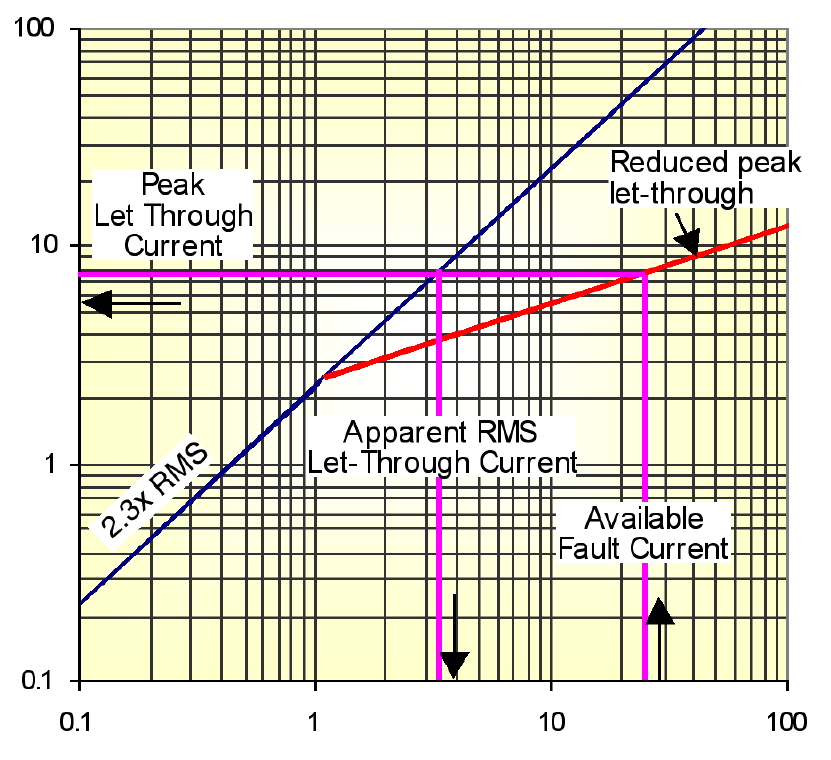
The figure above illustrates and compares the Peak Let-Through Current (RMS) of traditional fuses compared to electronic or smart IEFs shown with the red line with reduced fault current.
This ability to actively monitor and lower fault current translates into a reduced incident energy and lower arc flash thereby increasing electrical safety in the workplace.
_________________________________________________________________
Artificial Intelligence Based Electrical Safety
10/15/2024
Predictive machine learning models are a type of artificial intelligence (AI) system that uses algorithms to analyze historical data and make predictions about future events or outcomes.
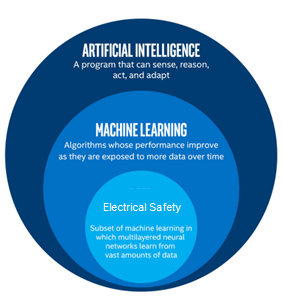
AI/ML models learn from past data to identify patterns and relationships between variables. They then use these learned patterns to forecast future trends, make predictions, and make informed decisions. Machine learning can be either supervised where a target variable is utilized or unsupervised in which there is not a specified target variable. Additionally, these models are valuable tools that can be used in a wide range of applications to gain valuable insights from data and make more informed decisions. As the figure below illustrates, machine learning and electrical safety are subsets of artificial intelligence.
Predictive Maintenance
Predictive maintenance is a strategy that uses data to analyze the condition of equipment and predict when maintenance is needed. Moreover, predictive maintenance can assist maintenance objectives by optimizing equipment performance and lifespan.
For this article we will focus on two primary areas of principle use of artificial intelligence for electrical safety which include predictive maintenance and arc flash. Predictive maintenance often includes failure prediction and insulation integrity of electrical conductors which prevent arc blasts and exposed energized components.
- Equipment Failure Prediction:
- Model: Train models (e.g., Recurrent Neural Networks (RNNs), Long Short-Term Memory (LSTM) networks) on historical data (current, voltage, temperature, vibration) from electrical equipment (transformers, motors, circuit breakers).
- Goal: Predict the remaining useful life of equipment, enabling proactive maintenance and preventing unexpected failures that could lead to safety hazards (e.g., fires, arcing faults).
2. Insulation Integrity
- Model: Utilize data from Partial Discharge (PD) monitoring systems, infrared thermography, and other diagnostic techniques.
- Goal: Detect early signs of insulation degradation in cables, transformers, and other high-voltage equipment, preventing catastrophic failures.
Arc Flash Hazard Prediction
Arc flash hazard prediction involves analyzing a facility to identify potential arc flash incidents and their severity. This information is used to assess risk and recommend protective equipment (PPE).
Electrical arch flash analysis is typically performed by a qualified electrical engineer will utilize electrical aided software to analyze a facility, including original drawings and the results of short circuit studies.
An incident energy or heat energy is then calculated as a method that measures the heat energy from an electric arc at a specific distance and determine a safe arc flash boundary for workers.
The National Fire Protection Association (NFPA) Standard 70E Article 130.5 requires arc flash assessments to be updated after major modifications or renovations and reviewed every 5 years at a minimum. However, with artificial intelligence and machine learning models, this can be monitored in real-time continuously to provide situational awareness and predict potential issues and arc flash hazards before they occur.
The objective here is to develop AI models which consider factors like equipment type, voltage level, fault current, and the presence of flammable materials, all in real-time providing workers and organizations with the ability to monitor, analyze and predict risk associated with electrical work and operations in real-time with valuable situational awareness.
To accomplish this,models can predict the potential severity of an arc flash incident at different locations within an electrical system with prediction variables including:
- System design specifications
- System use in years
- Maintenance record
- Current
- Voltage
- Resistive grounding
- Temperature
- Real and Reactive Power
This allows for the following enhanced electrical safety in the workplace measures which include:
- Informed PPE selection: Ensure workers have the appropriate level of arc-rated protective clothing.
- Optimized mitigation measures: Implement targeted engineering controls to minimize the risk of arc flash.
_________________________________________________________________
Applications of Computer Vision in Electrical Infrastructure to Increase Electrical Safety
11/15/2024
Computer vision is a field of artificial intelligence (AI) that uses machine learning and neural networks to teach computers and systems to derive meaningful information from digital images, videos and other visual inputs—and to make recommendations or take actions when they see defects or issues.
Computer vision works much the same as human vision, except humans have a head start. Human sight has the advantage of lifetimes of context to train how to tell objects apart, how far away they are, whether they are moving or something is wrong with an image.
Computer vision trains machines to perform these functions, but it must do it in much less time with cameras, data and algorithms rather than retinas, optic nerves and a visual cortex. Because a system trained to inspect products or watch a production asset can analyze thousands of products or processes a minute, noticing imperceptible defects or issues, it can quickly surpass human capabilities.
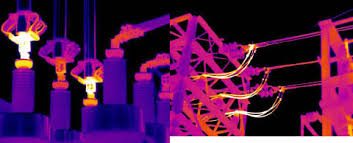
Computer vision offers promising potential for improving the monitoring and maintenance of electrical transformers. By leveraging advanced image processing techniques and artificial intelligence, utilities can enhance the reliability and efficiency of their power grids while minimizing the risk of costly failures.
As a result, when applied to electrical infrastructure, computer vision can be a valuable tool for monitoring electrical systems and predicting catastrophic failures before they occur including:
1. Thermal Imaging:
- Principle: Infrared cameras capture heat signatures. Overheated components (e.g., bushings, windings) indicate potential problems like loose connections, internal faults, or overloading.
Benefits:
- Early detection of hot spots, allowing for timely maintenance and preventing catastrophic failures.
- Non-contact temperature measurement, minimizing safety risks.
- Visual representation of heat distribution, aiding in fault diagnosis.
2. Visual Inspection:
- Principle: Cameras can capture images of the transformer’s exterior, looking for signs of damage, leaks, or abnormal conditions.
- Benefits:
- Detection of physical damage like cracks, leaks, or loose connections.
- Monitoring for signs of arcing, sparking, or smoke.
- Automated visual inspections can reduce the need for manual labor and improve efficiency.
3. Anomaly Detection:
- Principle: Using computer vision algorithms (e.g., convolutional neural networks) to analyze image sequences and identify unusual patterns.
- Benefits:
- Detection of subtle anomalies like changes in the appearance of oil, unusual vibrations, or abnormal operating conditions.
- Early warning of potential failures before they escalate.
As we discussed, real-time electrical infrastructure monitoring with artificial intelligence based machine learning models can provide valuable insights when predicting failures and scheduling condition based maintenance. Moreover, as technology and computing capability is increased, so to will be the eventual wide spread adoption of AI in electrical safety monitoring in the workplace.
_________________________________________________________________
 Electrical Safety Design